
This volunteer-led research project aimed to uncover how employees across multiple global locations understood, perceived, and emotionally responded to the organization’s employee reward and benefits system — including compensation, recognition, well-being offerings, and non-monetary rewards.
My role involved planning and conducting qualitative interviews, gathering respondent data across diverse locations and job roles, analysing insights, and synthesising key findings to support future improvements in employee experience and internal communication.
Project
Rewards & Benefits Research
51
In-depth interviews
20
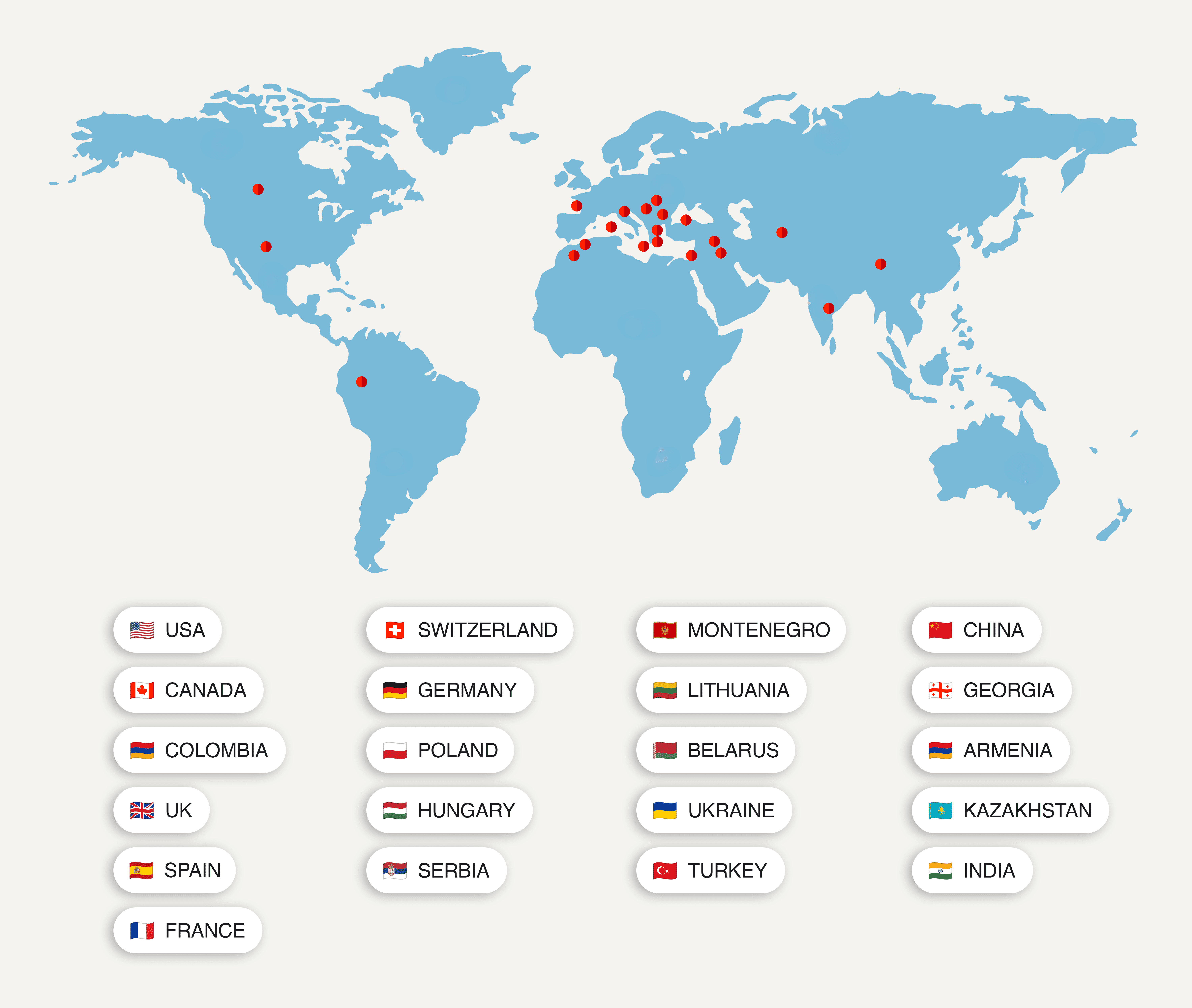
Countries
15+
Job functions

Main goal:
Understand employee perceptions, awareness levels, emotional responses, and pain points related to the existing reward and benefits structure, and identify opportunities for improvement
01
Assess whether employees understand the broader concept of employee rewards beyond base salary
02
Evaluate employee awareness of current benefits, recognition programs, and compensation structure
03
Understand which reward components employees find most meaningful
04
Identify what information employees expect to access — and in what format
05
Capture concerns and categorise them into areas for improvement
06
Evaluate the emotional impact of rewards on engagement and perceived fairness
Interview count
51 total interviews, including 18 relocated employees
Tracks & Roles
Tracks A2–A5 (38 respondents)
Software Engineers, QA, Business Analysts, Designers, Automation Engineers, Content Strategists, People Experience Specialists, Administrative roles.
Tracks B1–B3 (13 respondents)
Consultants, Learning Services Specialists, PM Team Leads, Solution Architects
Countries represented
Research strategy
+
User interviews
+
Insight synthesis
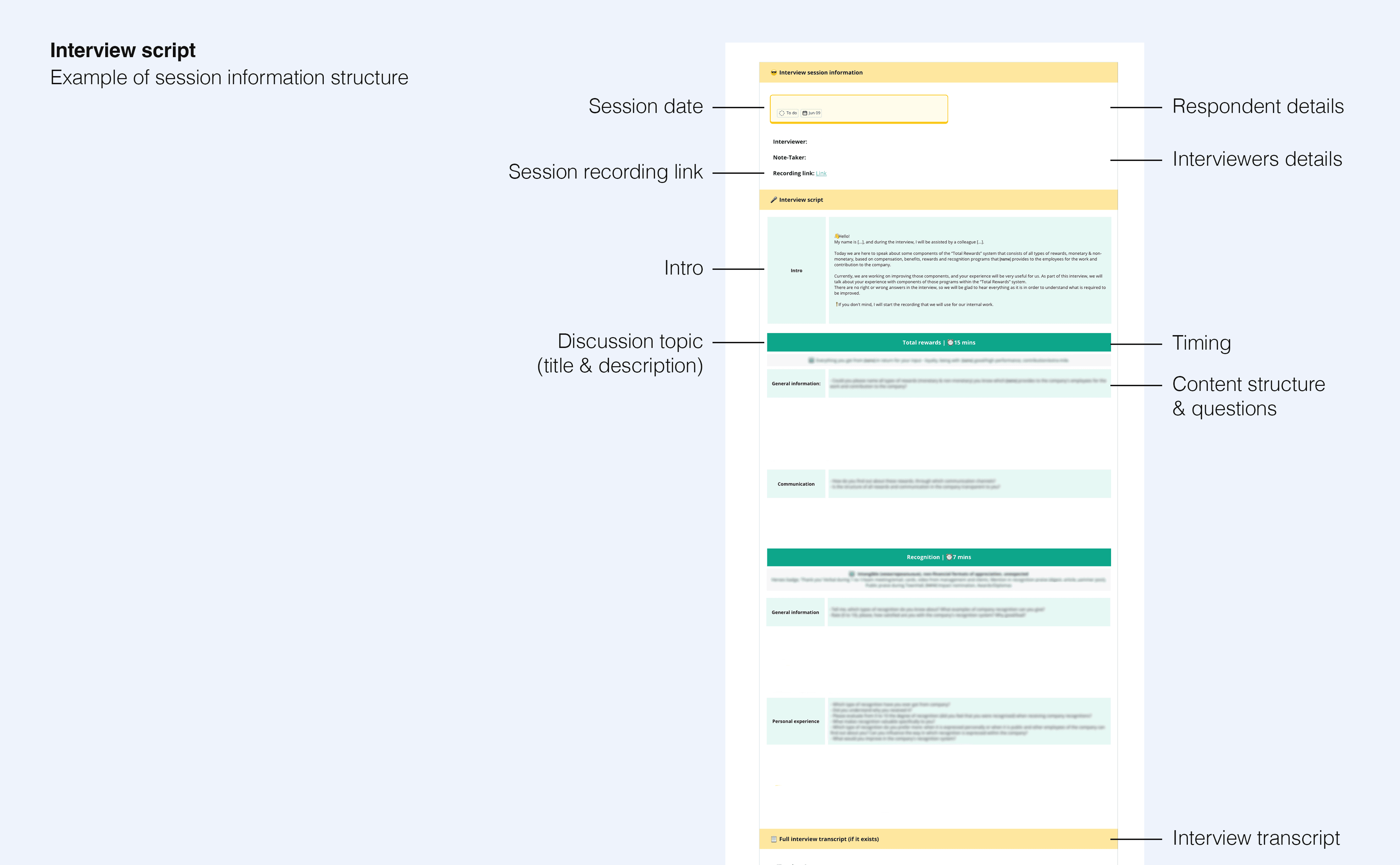
Interview script prepared by the research team and used as a structured guideline during the research sessions (content intentionally blurred for confidentiality)
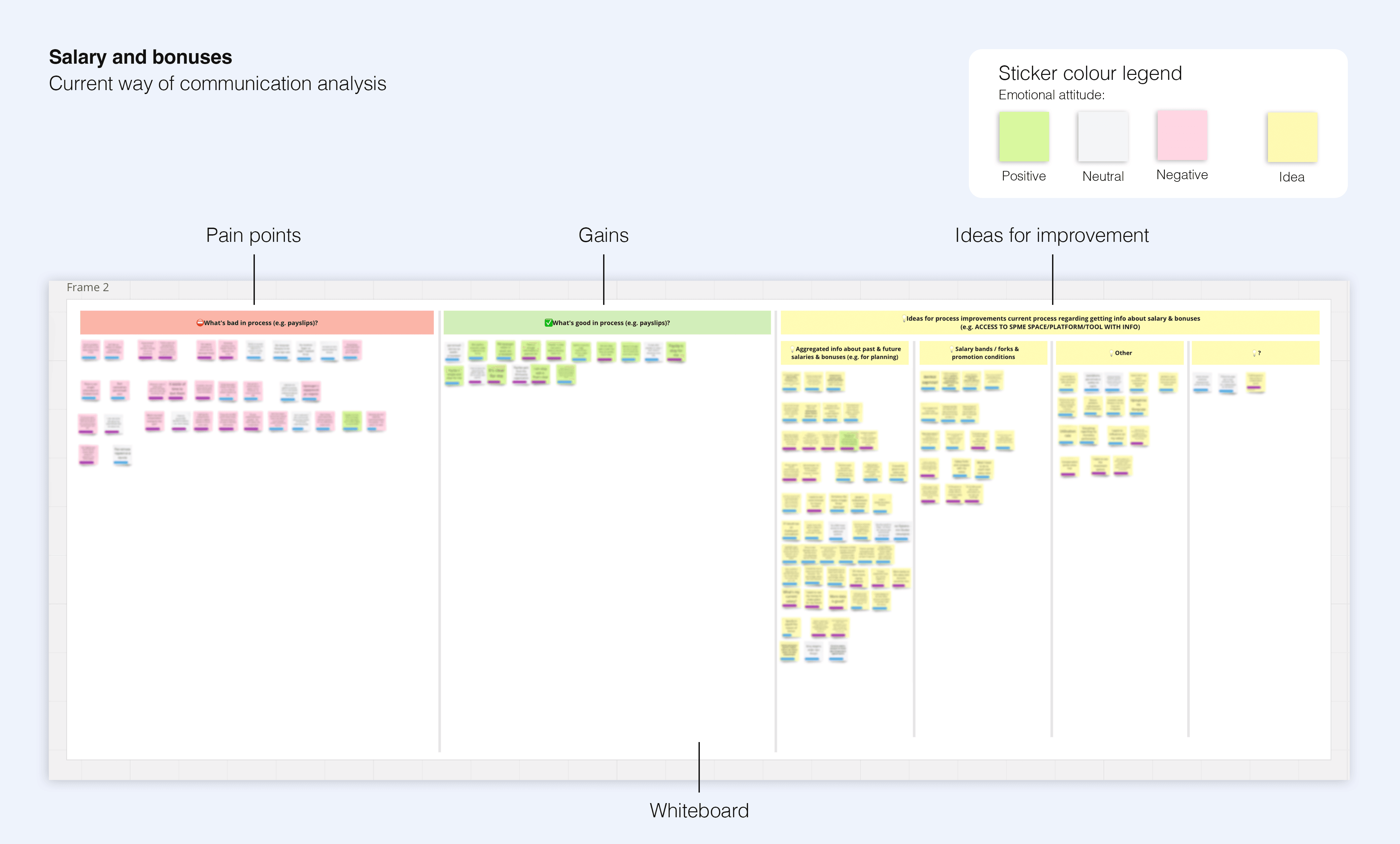
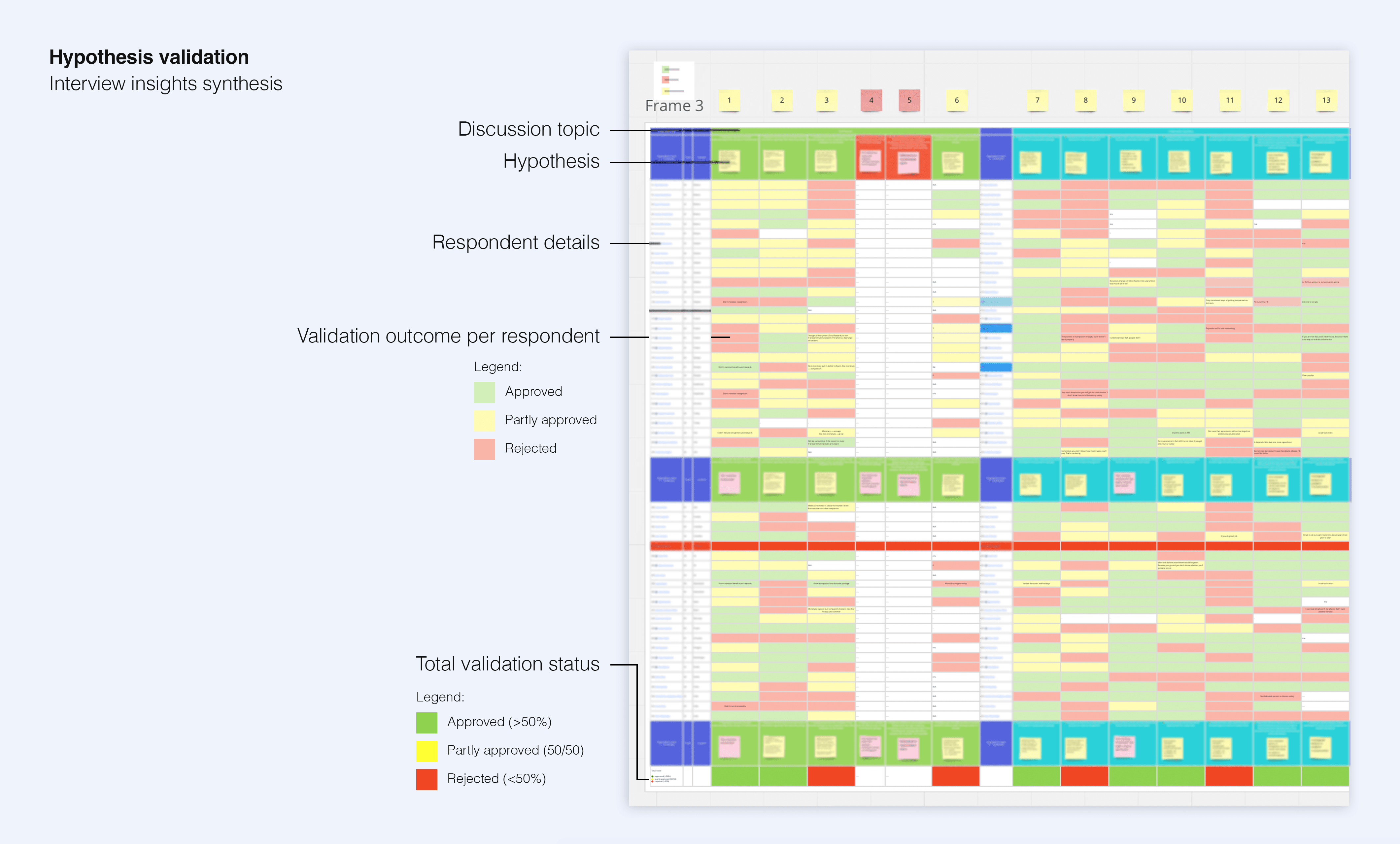
The research revealed a strong need for clearer communication, better transparency, improved localisation of information, and a more structured approach to presenting reward-related content. The findings served as input for improving internal communication and supporting future enhancements in employee experience tools
Communication clarity significantly impacts how employees perceive value.
Cultural and regional differences shape reward expectations.
Emotional factors are deeply tied to motivation and engagement.
Large-scale global research requires flexible methods and careful contextualisation